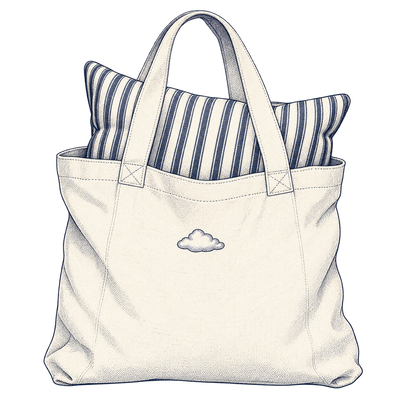
Illustrative sofa back cushion insert in a plain white inner casing; proportions vary by quoted dimensions. Decorative upholstery cover not included with an insert-only order.
Illustrative close-up of white muslin cushion casing with continuous fabric around the corner and no vertical corner seam.
Styling illustration of sofa cushions with decorative covers. Furniture, room and decorative covers are not included in an insert-only quote.
Back cushion measuring guide: width, height and thickness; send a dimensioned sketch for special shapes.
Six cushion fill options to discuss with the workroom. Your quote confirms fill, firmness, thickness, price and timing.
Insert only excludes the decorative cover. Insert plus COM cover includes a cover sewn from fabric supplied by the customer; decorative fabric is not included.
Sofa Back cushion — illustrative studio rendering; proportions vary by ordered size

24 × 18 Sofa Back Cushion

$160.00
Regular price $160.00

How to Measure Replacement Seat & Back Cushions

A Fluff Haus guide · Hickory, North Carolina · Updated October 18, 2026

Measure what the new cushion needs to fit. An old insert may have compressed; a stuffed cover may bulge. For a cover you plan to keep, use its empty, unstretched dimensions and check them against the furniture.

No measurements yet? Start with a question or a description of the problem.

Before you begin

  • A tape measure, a flat surface and a simple sketch.
  • The empty cover, if removable, plus access to the furniture platform.
  • A label for each position: left, center or right, viewed while facing the furniture.

Use inches and record fractions rather than rounding to a standard size. Do not add an allowance for fullness, seams or piping unless the workroom instructs you to.

1. Record the seat cushion dimensions

  1. Remove the insert. Close the zipper and lay the empty cover flat without pulling it tight.
  2. Measure the width from side seam to side seam.
  3. Measure the depth from front seam to back seam.
  4. For a boxed cushion, measure the border panel from its upper seam to its lower seam for thickness.
  5. Record whether the front and back widths differ, and whether corners are rounded or notched.

2. Measure backs separately

Record width from side to side, height from bottom to top, and thickness separately. Note how the back sits: on top of a seat, behind it, or between arms. Do not substitute seat depth for back height. Photograph the back in place so the workroom can see its intended relationship to the seat.

3. Check the furniture opening

Measure the usable platform from side to side and front to back. Note arms, trim, hardware and spaces that narrow toward the back. If the furniture has several cushions, check each position; they may not be identical. Compare these measurements with the covers and explain any discrepancy instead of averaging it away.

4. Knife-edge cushions need a different thickness reference

A knife-edge cushion has no separate border panel. Record the flat cover dimensions and describe the desired fullness or center loft separately. A measurement taken across a bulging, filled cushion is not the same as a flat cover measurement. Ask the workroom which finished-thickness reference is needed for the construction.

5. Draw T-shapes, L-shapes and curves

Draw a top view with the front clearly marked. Label the overall width and depth, main body, each projection or notch, and the location of rounded corners. Include thickness separately. Do not assume matching-looking wings have matching dimensions.

A photo cannot establish an exact curve or scale. Ask whether a full-size template is needed. If a template or old cushion is requested, confirm the method, address and whether it will be returned before sending anything.

6. Take three useful photos

  • The furniture with cushions in their normal positions.
  • The empty seating platform or backrest.
  • The cushion or empty cover from above and from the side, with unusual seams and corners visible.

Copy this checklist

  • Furniture type and cushion position.
  • Seat or back; quantity.
  • Existing cover dimensions: width × depth or height × thickness, where applicable.
  • Furniture opening dimensions.
  • Shape, front edge, corners and any ties.
  • Keeping existing covers, supplying COM, or requesting new fabric.
  • What feels wrong with the current cushion.

Common mistakes

Measuring over a stuffed curve, using old foam alone, stretching the cover, swapping back height with seat depth, assuming every position is identical, or adding a blanket oversizing allowance can all lead to a poor fit.

Get help checking your measurements → · Choose your cushion construction

Production lead time: 2–3 weeks.

All sales are final. Review the returns policy before ordering.

A better place to lean. Replacement sofa back cushions, sized for the backrest rather than the seat.

24 × 18 inches, width × height. Made to order in North Carolina.

Make this size work for your space

This size is 24 inches across and 18 inches high. Finished thickness is specified separately. Check the height available above your seat cushion and the space the back cushion will take from the usable seat depth.

For an individual cushion, measure each position separately if your furniture uses more than one. Matching furniture frames can still have slightly different openings.

Measure before ordering

Measure the finished cover seam to seam for width and height. Record thickness separately at the center without compressing the cushion. Tell us whether the back cushion sits on top of the seat or behind it, and send a photo of the sofa.

Construction and fabric

Back cushions support a different part of the body from seat cushions. Tell us if the current back feels too flat, too firm or too full so we can recommend the construction.

Configure and order your cushion on this page: choose insert only or insert + COM cover, then select your fill, dimensions, thickness and available finishing options. The price updates for your selections. COM uses fabric you supply; decorative fabric is not included. For cover-only work, special shapes or options not offered in the configurator, contact the workroom. Choose a construction suitable for where the cushion will be used.

One detail worth checking

Back height is the vertical measurement. It is not seat depth. For shaped corners, a T-back or an angled top, include a sketch.

About the images: White-cased inserts and room scenes are illustrative. Decorative covers are separate from an insert-only order. Your order records the options and dimensions you select in the configurator.